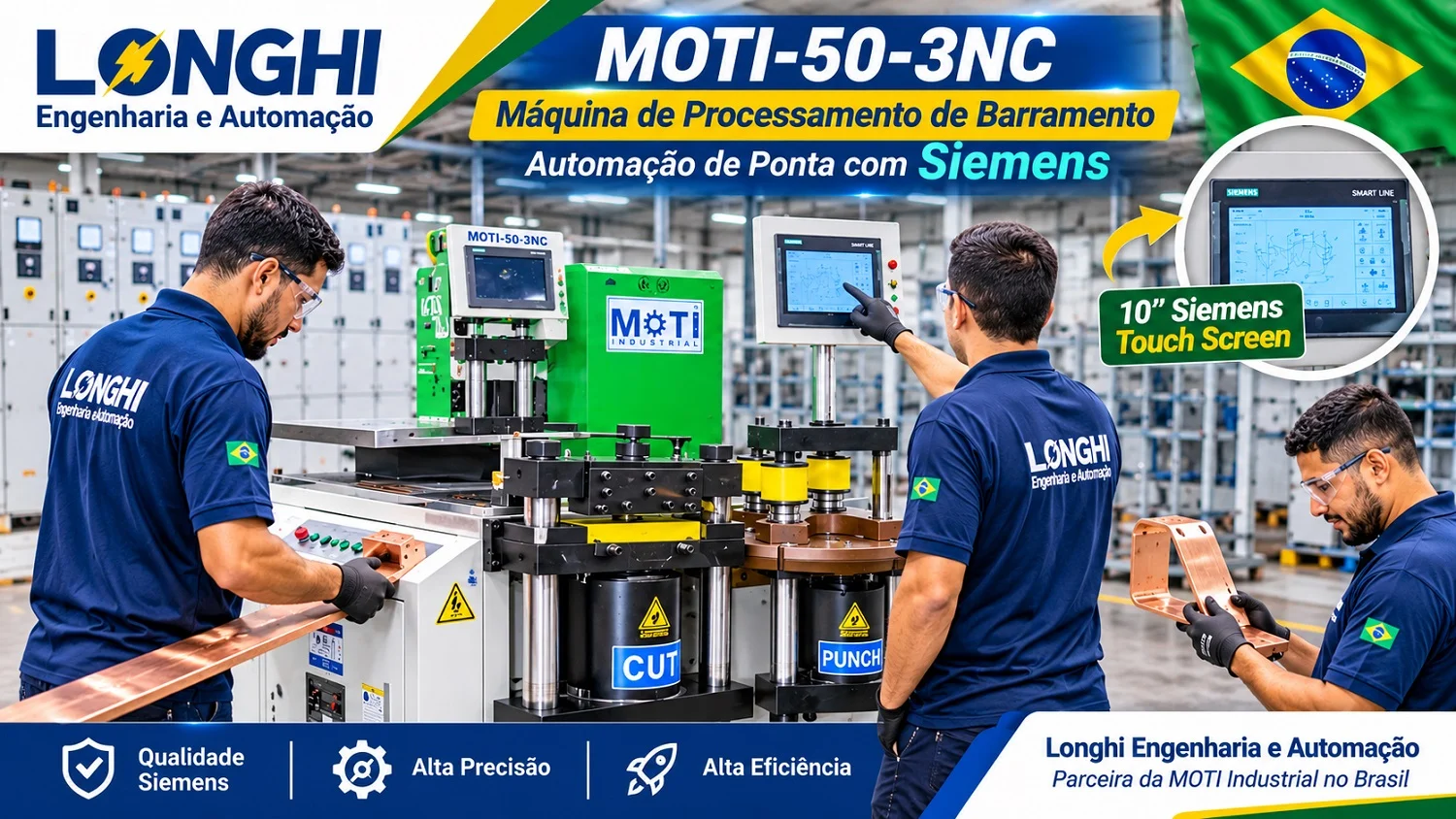
MOTI-50-3NC CNC Busbar Machine Shipped to Longhi Engenharia e Automação, Brazil
Today, we shipped a MOTI-50-3NC CNC 3-in-1 busbar processing machine to Brazil. The customer purchased this unit
after meeting the MOTI INDUSTRIAL team at the FEIMEC 2026 exhibition in São Paulo, Brazil.
At the time, the customer showed great interest; their accompanying engineer inquired in detail about the machine's operation and functions,
and even personally tested its punching, shearing, and bending capabilities. Ultimately, the customer decided to place an order.
1. MOTI-50-3NC
(1) Processing Capacity
This CNC busbar processing model can handle copper bars up to 16mm in thickness and 250mm in width,
a capacity perfectly suited to the requirements of local electrical switchboard manufacturers in Brazil.
(2) Cost-Effectiveness of the 3-in-1 Design
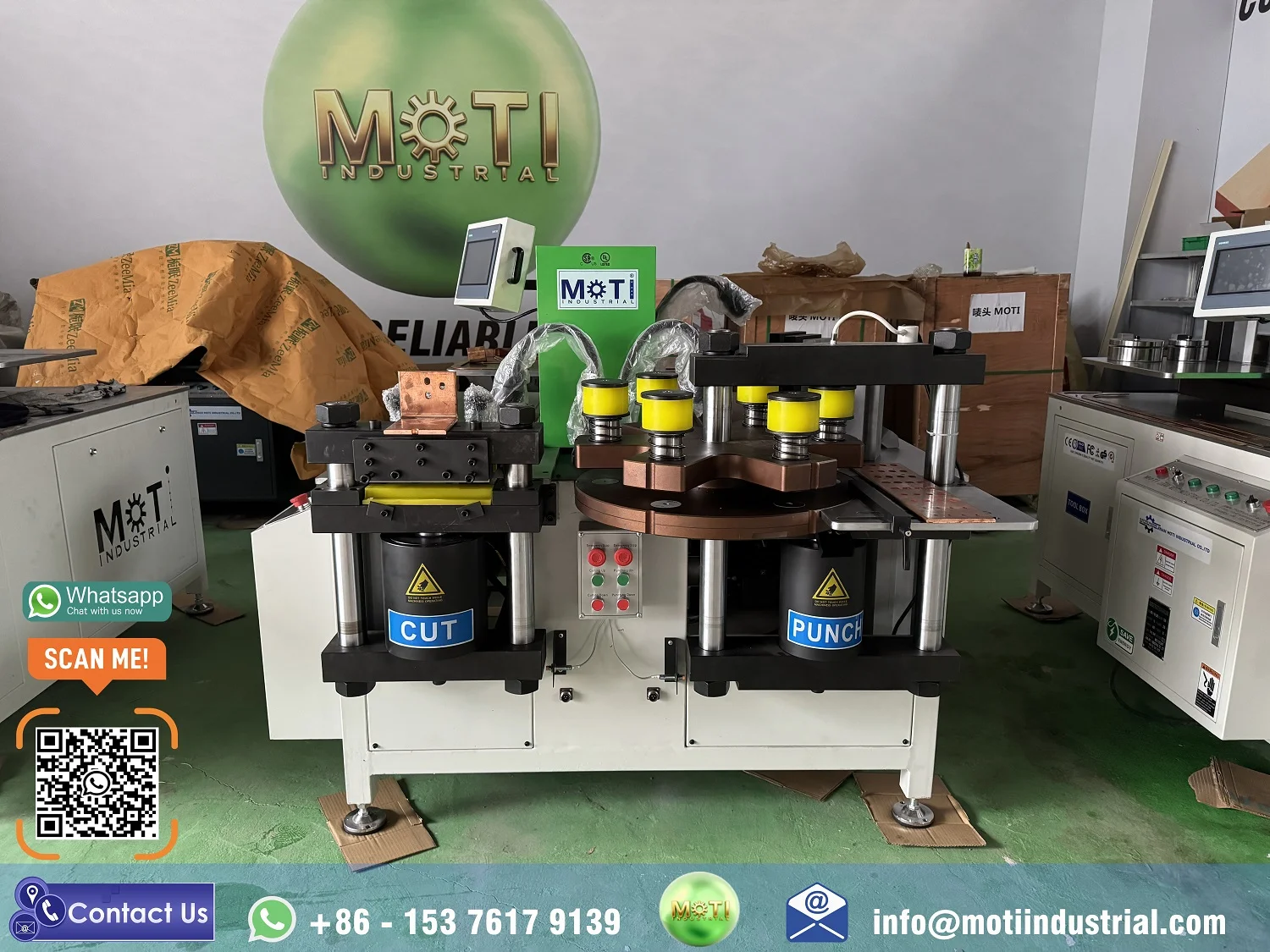
The MOTI-50-3NC integrates shearing, punching, and bending functions.
Its power system is equipped with three independent motors and three hydraulic pumps, allowing three operators to perform punching,
shearing, and bending tasks simultaneously without interference.
Compared to traditional processing methods, the MOTI-50-3NC offers 5 to 8 times the processing capacity and a 60% improvement in precision,
effectively helping the customer reduce costs and increase efficiency.
If you want to know more detailed information about the MOTI-50-3NC, check the below link,
https://www.motiindustrial.com/product/BUSBAR_MACHINE/cnc_busbar_processing_machine_3_in_1_/901.html
2. Advanced Siemens Control System
(1) Proprietary Development
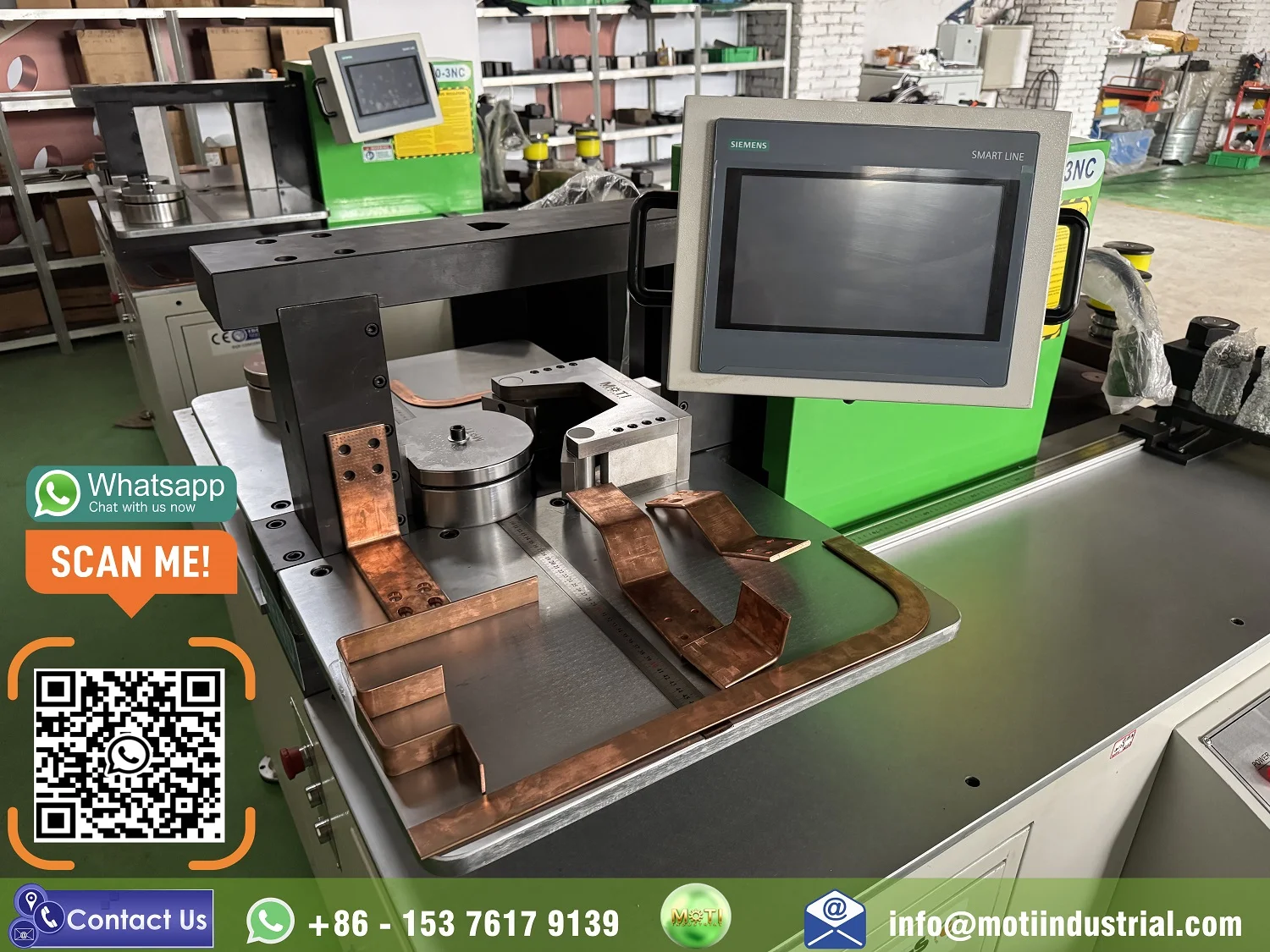
The MOTI-50-3NC features a 10-inch Siemens touchscreen, and all electrical components are sourced from the Siemens brand.
Building upon the Siemens programming platform—and incorporating feedback and usage habits from our customers.
MOTI INDUSTRIAL engineers have developed an enhanced operating system that is more intuitive and user-friendly.
(2) Streamlined User Interface
Unlike conventional CNC interfaces, the new Siemens-based operating system designed by MOTI INDUSTRIAL replaces
text-based buttons with intuitive icons—a design inspired by the central control interfaces found in modern automobiles.
In this way, regardless of the customer's country or native language—whether English or otherwise—they can quickly become familiar with operating the machine by simply recognizing the icons.
(3) Siemens Touchscreen
The current market for busbar processing machines is complex, with many suppliers being mere trading companies. In the OEM-produced machines they supply,
a large number of counterfeit or substandard electrical components are used—over 90% are fake Siemens PLCs, Schneider relays, or Schneider thermal relays.
Even the three installed motors are built with the absolute minimum amount of internal copper wiring; these companies resort to all sorts of unscrupulous tactics to achieve a lower selling price.
MOTI INDUSTRIAL chooses to take the opposite approach.
We are committed to using increasingly superior electrical components and higher-quality motors to ensure the overall excellence of our machines.
The Siemens touchscreen is just one highlight of a MOTI busbar machine; if you take a closer look, you will find that every aspect—
from the sheet metal components, shearing blades, busbar punches and dies, and bending tools, represents a significant leap in quality compared to other brands.
3. Bending Tools for Copper Busbars
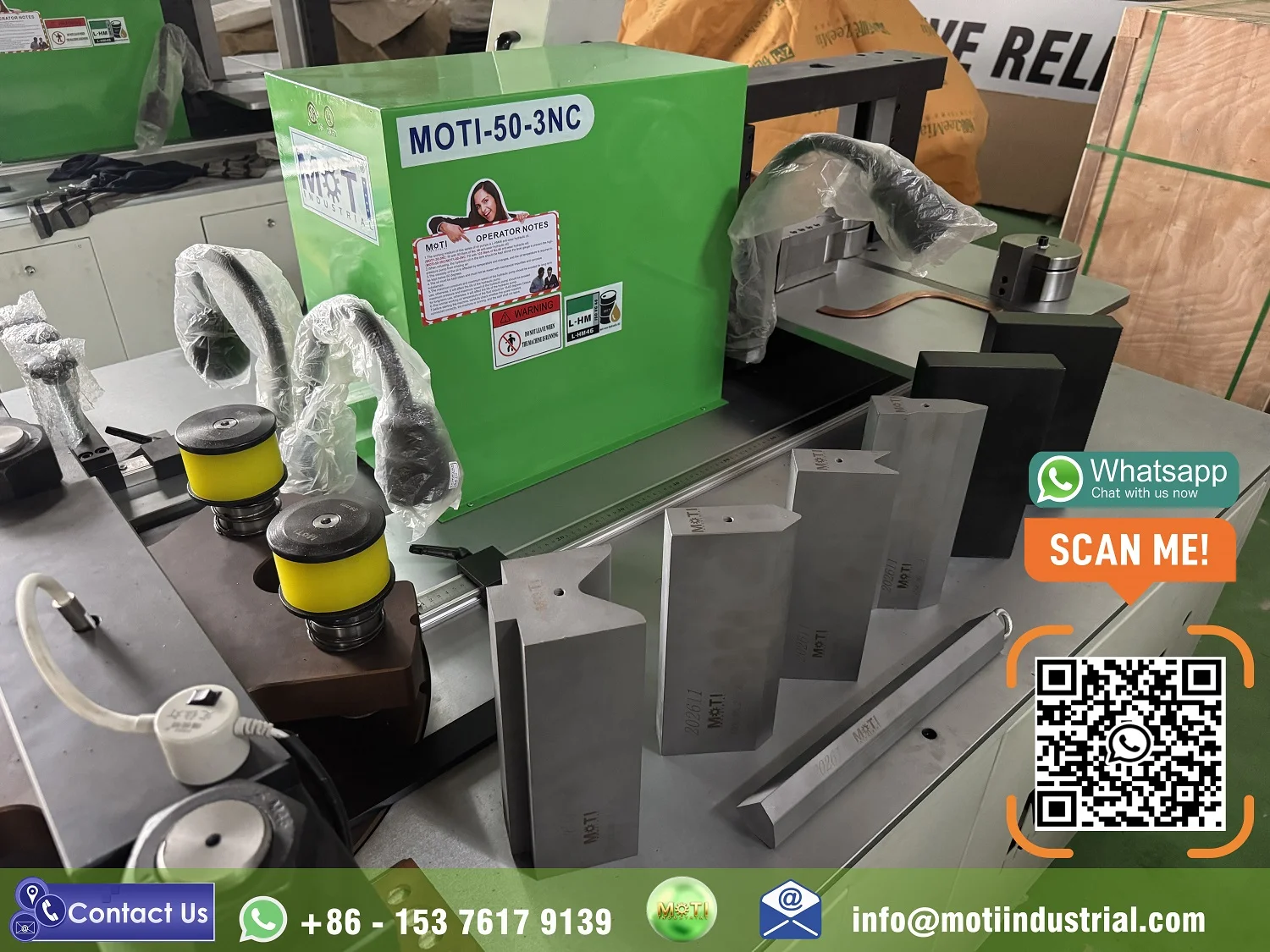
How can you evaluate the quality of bending dies?
(1) Material
Bending dies are typically made from 45-grade carbon steel. However, some suppliers use cast iron instead.
(2) Manufacturing Process
To increase hardness, bending dies usually undergo heat treatment or high-frequency hardening.
More than 95% of suppliers apply high-frequency hardening to only one-third of the working surface.
This significantly reduces the tool's durability; the female die (bottom die) often develops cracks within about a year of use.
(3) Appearance (Color)
If the bending tools you see are entirely black, it indicates that the surfaces have not been ground or polished—the black finish is used to "conceal flaws."
Our bending tools undergo a sandblasting process, resulting in a silver-white surface that allows the quality of the material to be clearly visible.
4. Busbar Punching Dies
How can you distinguish the quality of punching dies that look identical on the outside?
(1) Material
The material is the most significant differentiator for punching dies.
95% of manufacturers claim their punching dies are made from Cr12MoV tool steel—but is this true? Often, they are actually made from G15 steel.
The cost of G15 steel is less than one-fifth that of Cr12MoV.
Using low-cost, inferior dies forces customers to repeatedly purchase replacements within just three months of operating their machines.
Why? Because the material lacks the necessary hardness, causing the dies to break easily.
Some sellers lure customers in with low machine prices, only to generate profit by forcing them to constantly reorder replacement dies.
(2) Manufacturing Process
Without getting into overly complex technical details, you can determine the quality of a punching die simply by examining its core.
(3) External Dimensions
At MOTI INDUSTRIAL, we use specific punching dies tailored to each model of our busbar processing machines.
The punching dies for our 503 and 803 series machines are significantly larger in their external dimensions than those used for the 303 series.
This is because the 503 and 803 models are designed to punch thicker copper bars, which requires larger-diameter dies to ensure sufficient structural strength.
More than 90% of suppliers use the same, smaller-sized dies (designed for the 303 model) across their 303, 503, and 803 series busbar machines.
What does this tell you? It speaks for itself...
For instance, the Indian distributor Bhavya Machine Tools sources all its busbar processing machines from China.
The fact that they choose these specific machines is a clear indicator that the original Chinese manufacturers produce the lowest-quality equipment.
Since they prioritize the lowest possible purchase price, one can easily deduce—based on the external design of their machines—exactly which two Chinese manufacturers are supplying them.
If you are a client from India, you can go and see for yourself the actual quality of the machines they have imported.
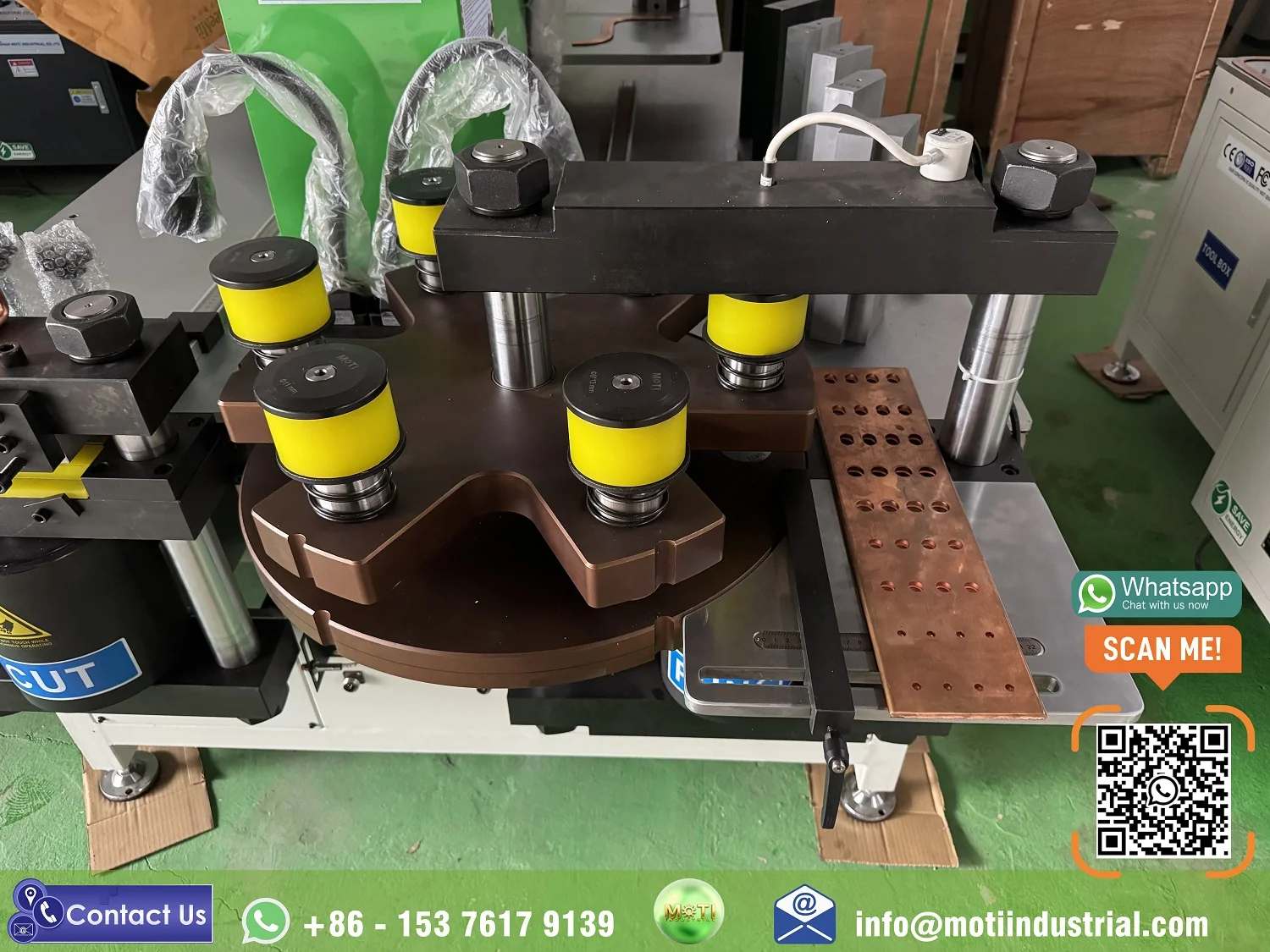
5. Cutting / Shearing Blades
It all comes down to the material.
Our shearing blades are made from Cr12MoV die steel—a material that 95% of other busbar machine suppliers definitely do not use.
If you ask them, they will almost certainly claim that their blades are also made of Cr12MoV steel.
Unfortunately, you will only discover whether you've received a counterfeit product after you have already purchased the copper busbar machine.
This is because the shearing blade is installed directly inside the shearing unit, making it impossible to see the blade in its entirety from the outside.
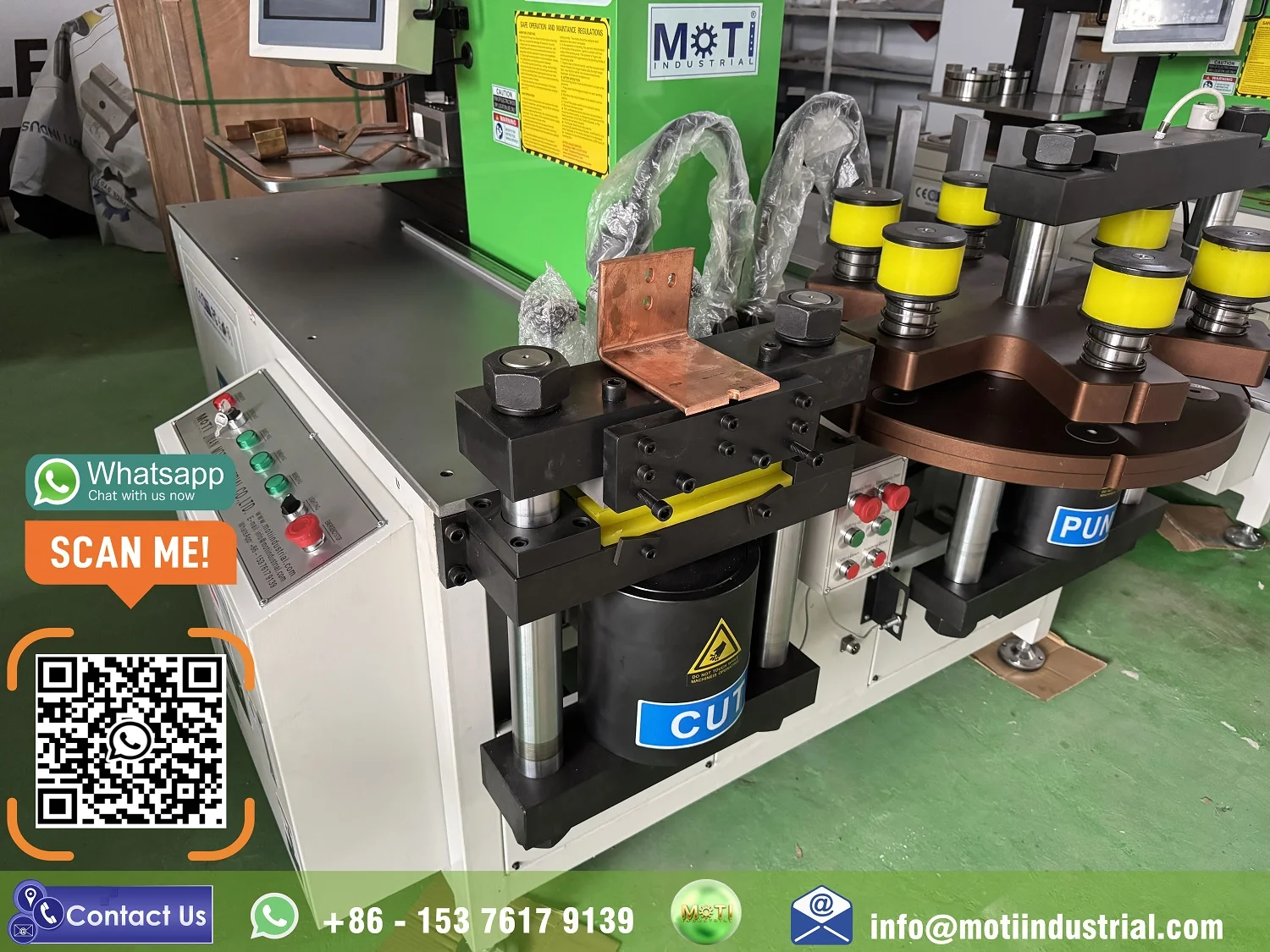
6. Where This Machine Is Going: Longhi Engenharia e Automação, Caxias do Sul
The MOTI-50-3NC in this shipment is going to Longhi Engenharia e Automação, an electrical engineering and industrial automation company based in Caxias do Sul, Rio Grande do Sul.
Founded in 1975, Longhi has delivered more than 6,000 projects and supplied over 8,000 electrical panels — command panels, motor control centres, low-voltage main switchboards,
power factor correction boards and refrigeration control panels — to refrigeration plants, machine builders and industrial clients across Brazil.
That is exactly the customer this machine was designed for. A panel shop does not process busbar once in a while;
it processes busbar every day, in short runs, with dimensions that change from panel to panel.
What that work needs is not the largest machine on the market, but a machine that can shear, punch, and bend the same bar without a second setup.
And that keeps the three operations independent, so one operator cutting does not leave another operator waiting at the punch.
It is also why the points covered in sections 3 to 5 of this article matter more than any line on a specification sheet. Longhi will not judge this machine on the day it is unloaded.
They will judge it in the second year, when the question is whether the shearing blade still cuts a clean edge,
whether the bending dies still hold their angle, and whether the punching dies still hold tolerance after tens of thousands of holes.
A purchase price is paid once. Tooling is paid for again and again — which is why we use Cr12MoV for our blades and dies,
and why we do not blacken our bending tools to hide the surface underneath.
The order itself began at FEIMEC 2026 in São Paulo, with an engineer who did not want to watch a video.
He wanted to punch, shear and bend a bar himself. He did, and then he placed the order. That is the only demonstration we consider valid.
From Jinan to Caxias do Sul is roughly 18,000 kilometres. The machine will spend the next decade proving that the distance did not matter.
MOTI INDUSTRIAL — CNC busbar machines built to be used, not just sold.
Contact us for specifications, tooling options and customized busbar processing solutions.